01
Understand the starting point.
The concern may involve volume, support, skin or previous treatment. Looking at the whole face helps explain which area needs attention.
THE CONCERN
Dissolving Filler · BANGKOK
Filler dissolving in Bangkok begins with an assessment. At MICHIKO, we discuss whether hyaluronidase may be appropriate for your previous HA filler, and what the process could mean for you.

A THOUGHTFUL START
Hyaluronidase is an enzyme used to break down hyaluronic acid filler. It is not a universal way to remove every injectable material. Identifying what was used is part of deciding whether dissolving is appropriate.
You do not have to arrive with the answer. Bring your questions.

WHEN FILLER DOESN’T FEEL RIGHT
MICHIKO · CORRECTIVE CARE
Hyaluronidase can break down hyaluronic-acid filler. But a raised area may involve swelling, inflammation, product placement or a different material. MICHIKO first identifies what is causing the contour before deciding whether dissolving will help.
Understand the next stepThe Thai guide highlights infection as a possible issue when a filler lump is assessed. The doctor needs to distinguish product position, inflammation and infection before choosing treatment. Worsening pain, redness, heat or fever should prompt clinical contact rather than waiting for routine cosmetic review.
View original graphic at full sizeMICHIKO · CORRECTIVE CARE
The guide highlights signs that need a closer assessment: swelling that returns, increasing tenderness, redness or heat. Bring the timing of each change and any previous treatments. Worsening pain, redness or fever needs prompt medical attention.
Understand the next stepThe graphic asks for a detailed treatment history: the product or material, amount, injection areas and timing. Bring records or photographs where available, and mention previous reactions and any attempted correction. An unknown material may change the assessment and treatment options.
View original graphic at full sizeMICHIKO · CORRECTIVE CARE
Removing existing filler may reveal the face’s underlying shape. Allow the doctor to reassess once swelling settles before deciding whether any volume needs replacing. A staged plan gives you time to understand the change and choose your next step.
Understand the next stepFollow the connections.
A little understanding makes room
for a more personal conversation.
ILLUSTRATIVE AREAS · PERSONAL ASSESSMENT COMES FIRST
The concern may involve volume, support, skin or previous treatment. Looking at the whole face helps explain which area needs attention.
THE CONCERNTell Dr. Gift and our medical team what has changed and what you want to retain. Examination considers tissue, movement and treatment history.
THE CONNECTIONAsk what the proposed treatment can change, what it cannot and how the result will be reviewed. Choosing to wait is also an option.
YOUR PERSONAL PLANSTART WITH THE CAUSE
A puffy under-eye, a firm lump or swelling that returns can look similar in a photograph. When it started, how it feels and what was injected help MICHIKO decide what your face needs next.
The injection itself can cause temporary swelling, bruising and tenderness. Early fullness does not always mean excess filler. Ask the treating doctor what to expect and report symptoms that worsen rather than settle.
Swelling or nodules may appear later or come and go. Inflammatory reactions and other causes can look similar, so a history and examination matter more than judging a photograph.
Increasing redness, warmth, pain, discharge or fever needs prompt medical assessment. Suspected infection changes the treatment plan; it should not be treated as a routine cosmetic lump.
The depth, position, material and amount of filler can affect contour. A superficial or uneven deposit may be visible as a ridge or lump. Your clinician should assess whether correction is appropriate.
THE NEXT QUESTION
The cause guides the care. Your doctor may discuss observation, assessment for inflammation or infection, or correction of HA filler. Avoid pressing, massaging or adding more filler to a lump without medical advice.
A CLIENT’S TREATMENT JOURNEY
When earlier filler leaves the under-eyes looking puffy, adding more volume may not be the right starting point. In this case, MICHIKO dissolved the existing filler first. Dr. Gift then planned support across the under-eyes, folds and lower face, bringing the features back into balance.
Explore the full storiesMICHIKO · FILLER DISSOLVING GUIDE
Four conversations help shape a dissolving plan: what was injected, what is causing the concern, your medical history and how the result will be reviewed.
Tell us the area, brand and model, amount in cc, dates, doctor and clinic. Bring available records or photographs. Missing details are worth mentioning too.
The graphic asks for a detailed treatment history: the product or material, amount, injection areas and timing. Bring records or photographs where available, and mention previous reactions and any attempted correction. An unknown material may change the assessment and treatment options.
View original graphic at full sizeA lump may involve filler, inflammation or infection. The doctor needs to understand the material and symptoms before deciding whether, and how, to dissolve.
The Thai guide highlights infection as a possible issue when a filler lump is assessed. The doctor needs to distinguish product position, inflammation and infection before choosing treatment. Worsening pain, redness, heat or fever should prompt clinical contact rather than waiting for routine cosmetic review.
View original graphic at full sizeHyaluronidase can cause allergic reactions. Tell the clinician about previous reactions, medicines and allergies, and ask how suitability and emergency readiness are assessed. Trouble breathing, facial or throat swelling, or collapse needs emergency help.
MICHIKO’s guide advises allowing 7–14 days before considering new filler. That is a discussion point, not a fixed recovery promise: your doctor should confirm timing after assessing swelling and healing. More than one dissolving session may be needed.
MICHIKO · A PATIENT’S STORY
Watch MICHIKO’s Thai-language patient review about seeking correction after previous filler treatment.
An individual experience. Results and treatment plans vary.
SUCCESS STORIES · MICHIKO
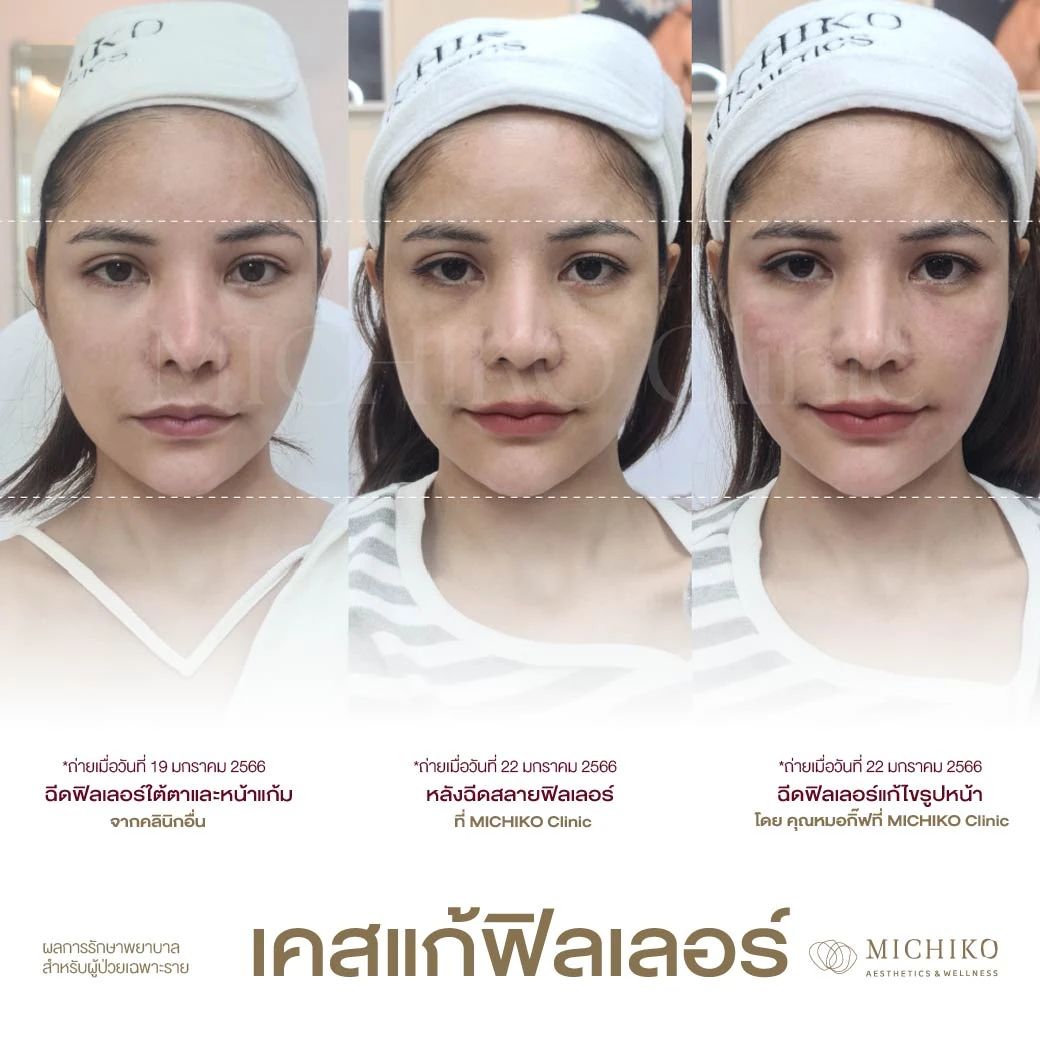
Original case photographs, with their treatment labels and timing retained. Combined treatments belong to the whole story. Individual results vary.
Explore an existing MICHIKO filler correction case. For examples relevant to the area you want to discuss, our team is happy to share more during your consultation.
Ask about relevant casesThese photographs show an individual filler correction case. Results vary and cannot be guaranteed.
A CLOSER LOOK · MICHIKO
Previous filler, hyaluronidase and reassessment before adding more.
Choose a topic, or keep reading.
The concern. The cause. The possibilities.
Hyaluronidase acts on hyaluronic acid. It is not a universal dissolver for silicone or other non-HA materials. The response varies with the product, location and amount present, and reassessment or staged treatment may be needed. The enzyme dose cannot be calculated from a photograph or the old number of syringes alone.
There is no standard dissolving dose for every lump or area. The suspected material, product characteristics, amount, location and examination guide whether hyaluronidase is appropriate and whether more than one session is needed. Complete removal in one appointment cannot be guaranteed.
Ask whether the quote covers assessment, the proposed area, follow-up and possible further treatment. Under-eye HA can sometimes be dissolved, but persistent swelling still needs a diagnosis. The final contour is reviewed after the response settles; a return to the underlying volume deficit can look different from the filled appearance.
Know what comes before and after.

This Thai guide introduces assessment before dissolving. The key questions are what material was injected, where it is located and what is causing the problem. Hyaluronidase is used for hyaluronic-acid filler; an unknown or non-HA material needs a different assessment.
View original graphic at full sizeA persistent lump is not proof that more hyaluronidase is needed. Remaining HA, swelling, inflammation, infection, scar tissue or a different material can look similar. The clinician may need treatment records, examination and additional investigation before deciding what to do. A granuloma is an inflammatory tissue reaction; it should not be diagnosed from appearance alone.
Discuss previous reactions to hyaluronidase, medicines and relevant allergy history before treatment. Swelling, bruising and allergic reactions are possible; severe allergic symptoms need urgent care. Dissolving can reveal the underlying contour and volume change rather than creating a predictable new shape.
Refilling should wait until the clinician has assessed recovery and the original problem. A fixed same-day or two-week promise may not fit inflammation, infection or an uncertain material. Ask for the review plan, expected cost and what further investigation would involve.
Bring previous treatment dates, products and photographs if available. Tell the doctor about medicines, supplements, allergies, medical conditions, pregnancy or breastfeeding, and any infection or irritation near the area. Ask about the intended product, alternatives, cost and follow-up before consenting.
Some medicines and supplements can affect bruising or bleeding. Do not stop prescribed medicines yourself; any change should be agreed with the prescribing clinician. Ask the clinic about alcohol, exercise and other preparations relevant to your appointment.
Follow your treating doctor’s instructions for skin care, activity, pressure on the area and the timing of other procedures. Mild swelling, tenderness or bruising can happen. Avoid firm massage unless the clinician specifically advises it, and ask how and when to use a cool compress.
Contact the clinic for increasing swelling, persistent pain, redness, warmth or a new lump. Severe unusual pain, pale or dusky skin, or vision changes need immediate medical attention. Keep the urgent contact details and attend the agreed follow-up; an early swollen photograph is not the final result.
WHY MICHIKO
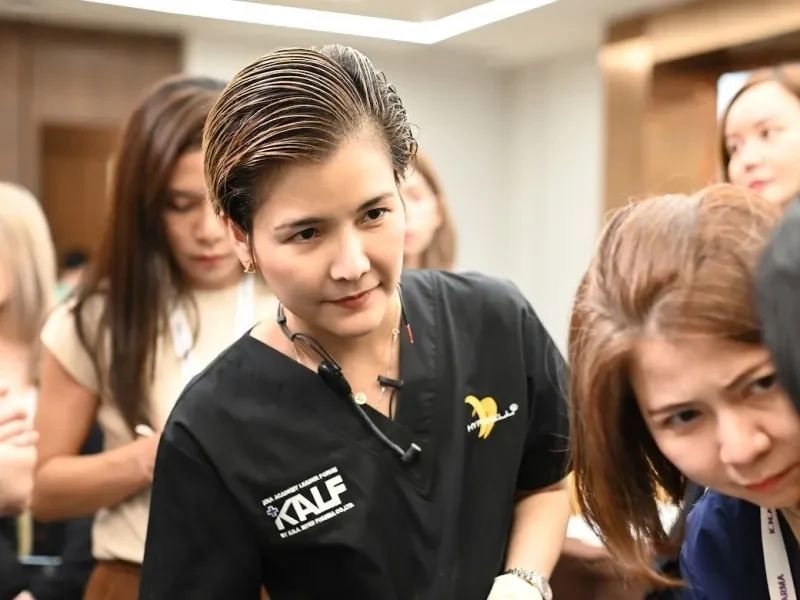
Dr. Wisuttiya Boonsom, known as Dr. Gift, leads the MICHIKO medical team. Our approach brings your concerns, previous treatments and priorities into the same conversation.
Bring your story. Ask how the proposed plan relates to your own starting point.
Discuss alternatives, limits and follow-up with the medical team.
YOUR CONSULTATION
Your doctor considers the material, area and treatment history before discussing an approach. Ask what should happen next and how progress will be reviewed.
Tell us what changed and what matters to you. Earlier photographs and a timeline of treatments can help guide the conversation.

Your doctor reviews your face, previous treatment details and health history. This is the time to discuss any symptoms as well as your aesthetic goals.
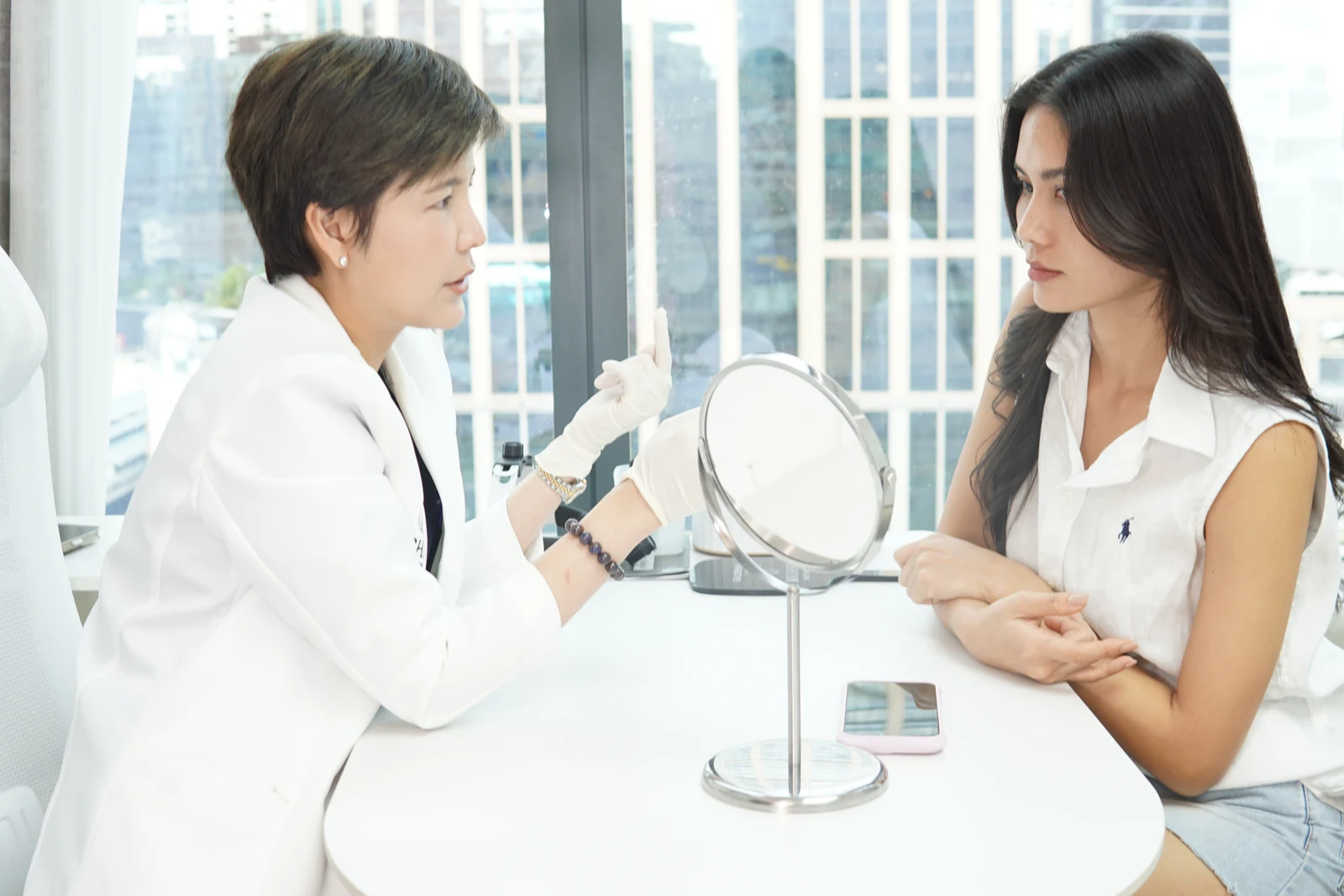
Talk through the proposed approach, alternatives and limits. Agree on what to address, what to leave alone and what needs further assessment.
Leave with a clear next step, an understanding of costs and a follow-up plan. You can ask more questions before committing to further treatment.

BEFORE YOU VISIT
Hyaluronidase breaks down hyaluronic acid (HA) filler. Other materials, including permanent fillers, need a different assessment and may be difficult to remove.
No. A lump or swelling can have different causes, including inflammation or infection. A doctor should assess the cause before suggesting routine dissolving.
The response varies with the product and clinical situation. More than one session may be needed, with review between treatments.
Ask about swelling, bruising, discomfort, changes in contour and allergic reactions. Share your medical history, medications, allergies and any previous reaction to hyaluronidase.
Agree on a review with your treating doctor before planning any new filler. Recovery, your remaining concerns and whether further treatment is needed should guide that decision.
The current MICHIKO Thai page lists filler dissolving from ฿2,500 per area. The final cost depends on the assessment and proposed treatment. Confirm the quotation, follow-up and any additional sessions with the team.
Bring the filler brand and model, amount, treated areas, dates, clinic and doctor, plus medical and allergy history. Tell us about any symptoms and when they began.
Yes, but the material and cause of the concern need assessment. Visible lumps, swelling and a blue-grey tint can require different considerations. Do not try to diagnose the cause from appearance alone.
That cannot be guaranteed. The loss of filler volume can change how your contours look, and early swelling may obscure the result. Discuss realistic expectations and follow-up before treatment.
Ask your doctor for individual aftercare, review timing and a contact route for concerns. Avoid self-treating or pressing a lump without their advice. Worsening pain, redness or swelling should be checked.
YOUR NEXT STEP
Message us on LINE, choose EmSphere or Phahonyothin 21, and mention dissolving filler. Dr. Gift and our medical team will assess your face, explain the options, risks and cost, and leave the decision with you.
Helpful to bring: previous procedures, current medicines and any allergies.
TRUSTED AT MICHIKO
Familiar faces. Personal care.
























MICHIKO · BANGKOK

9/2 Supalai Park Building 1, Phahonyothin 21, Chatuchak, Bangkok 10900
Sat–Mon 10:00–19:00 · Tue–Wed 11:00–20:00 · Thu–Fri 10:00–19:00

EM TOWER, Floor 7, Room 7T 01, EmSphere, 628, 630 Sukhumvit Road, Khlong Toei, Bangkok 10110
Daily 11:00–20:00
Explore how your previous treatments and current concerns shape a correction consultation.
Explore the programme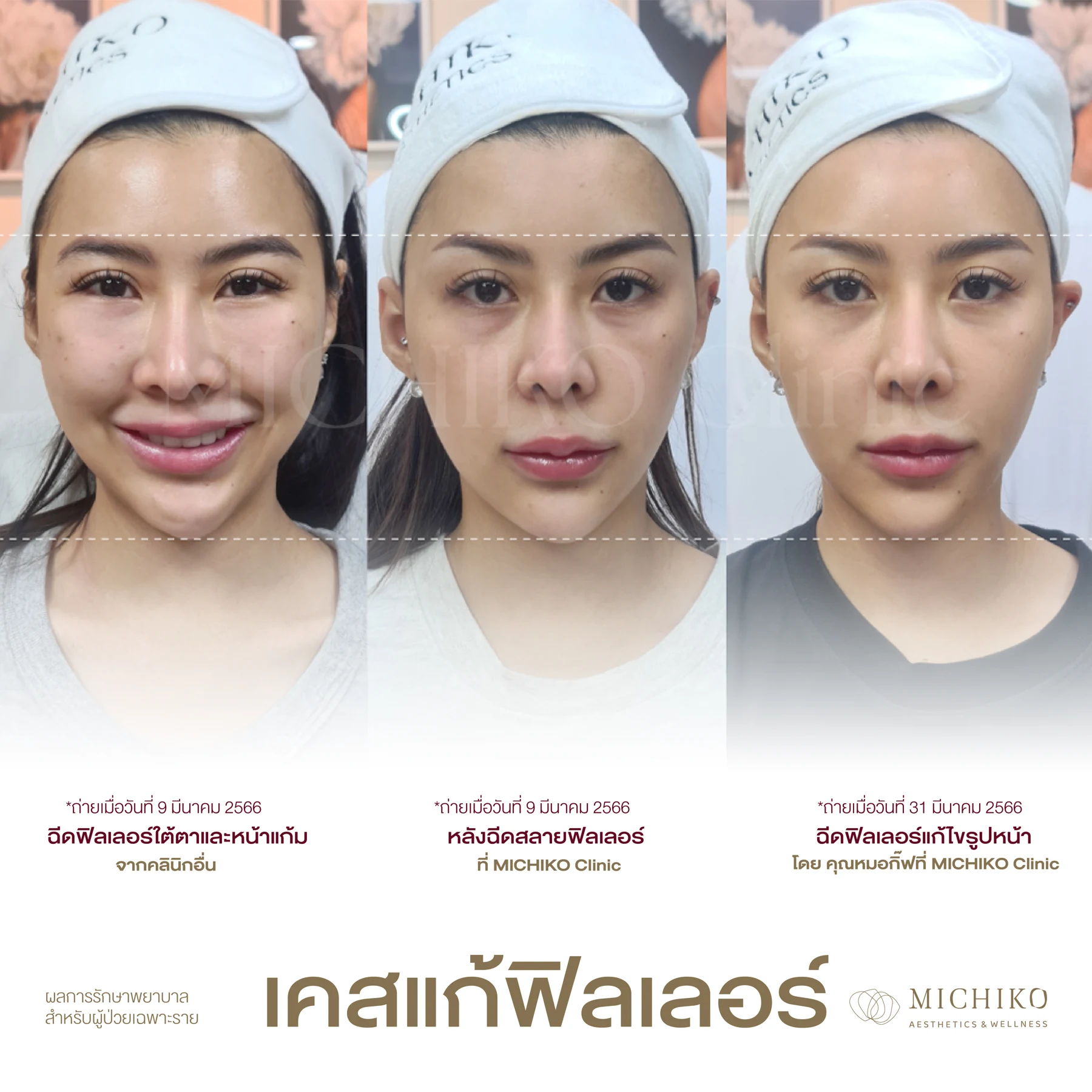
Take a wider view of fullness, proportions and your treatment history.
Explore the programme